
Best game asset tools for Codex users
Codex writes your game and cannot draw a single pixel of it. These are the game asset tools for Codex users worth installing, one job at a time: concept art at $0.15 per run, store art from the same reference, a 3D model from $0.22 per run (none-standard-triangle), and a character voice for well under a cent. Every price, time, and file below comes from a real run we paid for.
連接你的 AgentThe character we used for every test
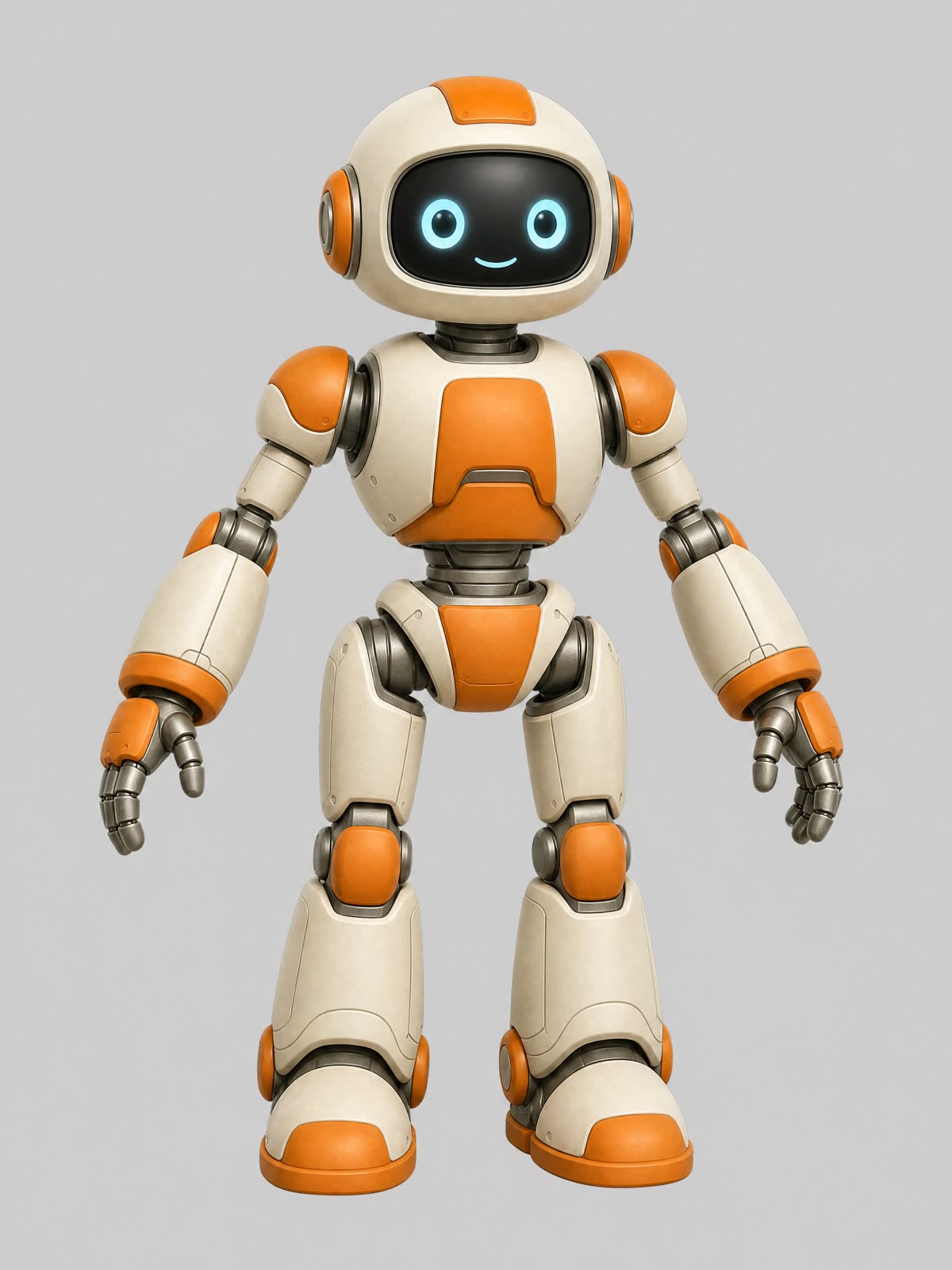
One brief, one character, four jobs. Everything below starts from the same robot explorer so the comparisons are about the tools rather than about four different prompts. The concept art itself is the first job: GPT Image 2 at $0.15 per run, asked for a full body in a neutral pose on a plain background — the shape a 3D model needs later.
1. Store art: the same character, a different frame
The job most indie projects hit first is store art, and the hard part is not making a nice picture — it is making the same character twice. Passing the concept image back as a reference did that. Two runs, two aspect ratios, $0.15 per run each, 65 and 75 seconds, and the robot is recognisably the same robot: same head shape, same orange panels, same face.


Two practical notes. Ask for the aspect ratio you actually publish at — 2:3 lands on the vertical library size exactly, while a 16:9 render needs a small crop for a wider capsule, and cropping a generated image is free local work. And keep text out of the image: models spell badly, and a title you add yourself in any layout tool stays editable when the price or the tagline changes.
2. 3D: the polygon budget is the whole decision
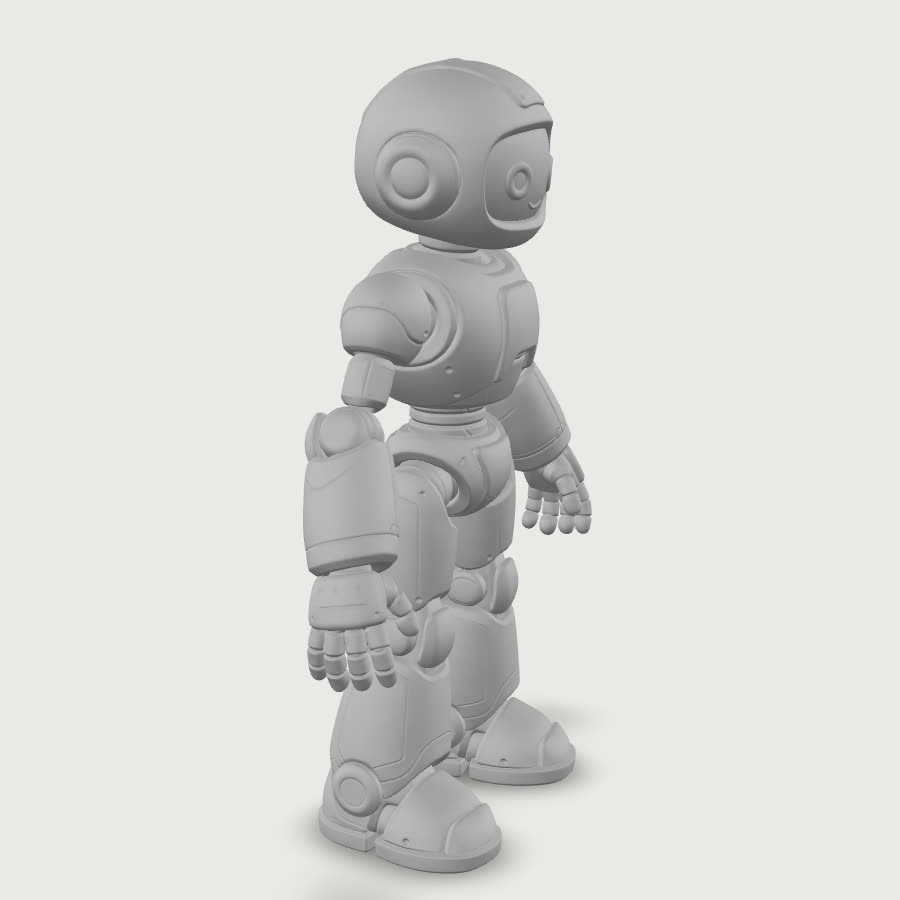
Both 3D services take one image and return a model, and on price they look four times apart. What actually separates them is what arrives. We ran the same concept image through both, on the cheapest configuration each offers.
| Service | Configuration | Price | Render time | File | Triangles |
|---|---|---|---|---|---|
| Tripo H3.1 | no texture, standard geometry, triangles | $0.22 per run (none-standard-triangle) | 2 min 14 s | 40 MB .glb | 1,489,974 |
| Meshy V7 | no texture | $0.968 per run (untextured) | 2 min 12 s | 1.2 MB .glb | 31,259 |
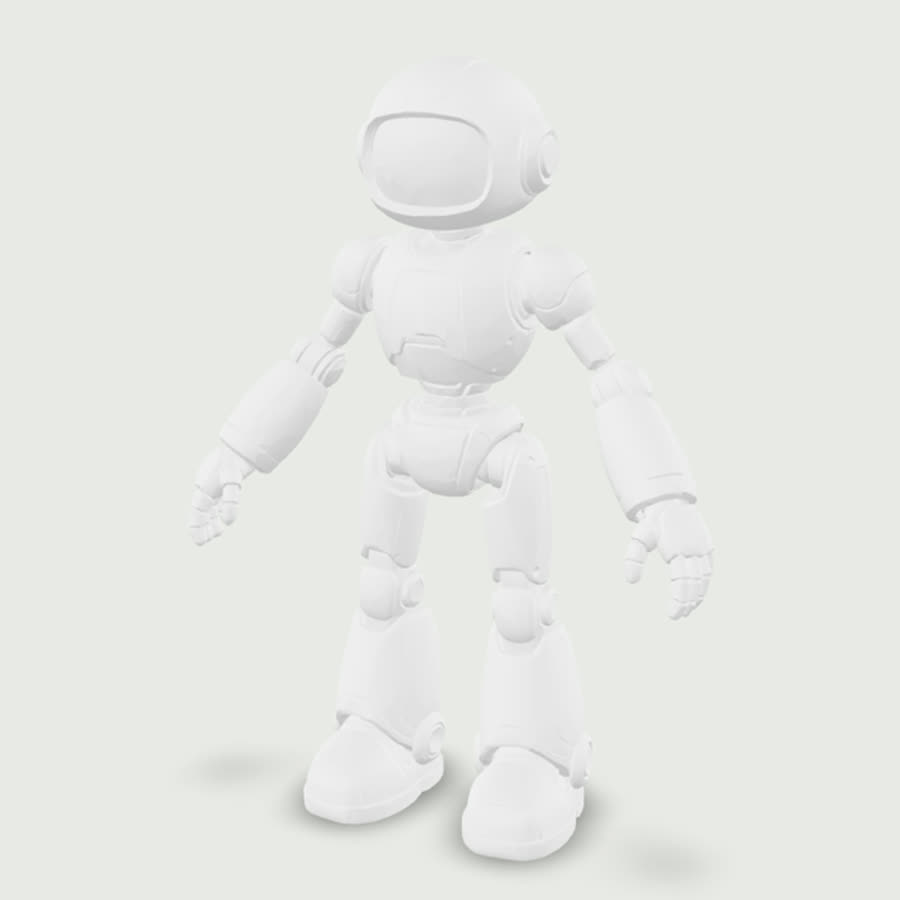
That is the same character at 48 times the density on one side and a game-ready budget on the other, for a difference of about seventy-five cents. A 1.5-million-triangle mesh is not a bad model — it is a scan-grade one, useful if you are going to retopologise it yourself and wasteful if you are not. Both services accept a target polygon count and a face limit in the call, so the fix is to say the budget out loud in your request rather than to pick the cheaper service and then spend an evening decimating. Ask for triangles if you are heading straight into an engine and quads if the model goes through a modelling package first; the topology choice also decides the file format you get back.
3. Character voice: cheap enough to cast by ear
One line of robot dialogue, two speech models, same text. At $0.002 per 40 characters (text) of script, an 83-character line is $0.006 for 83 characters at $0.002 per 40 characters (text) — which means casting a character is a matter of listening to both rather than choosing on a spec sheet.
MiniMax TTS · 5.9 s of audio · rendered in 9 seconds · $0.006 for 83 characters at $0.002 per 40 characters (text)
VoxCPM · 5.1 s of audio · rendered in 12 seconds · $0.006 for 83 characters at $0.002 per 40 characters (text)
Both readings are usable and they are not the same performance: MiniMax lands slightly brisker, VoxCPM slightly softer. Neither needed a voice chosen or settings tuned. For a game with dozens of barks, the useful property is not which one wins but that a whole line list costs less than a coffee, so you can re-record after a script change instead of living with the old take.
How to run any of this from Codex
Ask in plain words. The Skill keeps an index of the catalog on disk, so before it runs anything the agent replies with the services that fit, each with its price, and picking one is the approval. Nothing is charged until you pick, and if the wallet cannot cover the run the agent stops before anything is spent and hands you a top-up link. The image work goes through the image generation capability, the models through 3D generation, and the dialogue through voice generation — one balance covers all three, and every run lands as a file in your project.
你這樣問
Take outputs/character.jpg and make me a 3D model I can drop into the engine — keep it under 30k triangles, triangles not quads, no texture for now.
Saying the polygon budget and the topology in the request is what turns a generated model into an asset you can use. The agent lists the services with prices and runs the one you pick.
Set it up once
npm install --global @actionway/cli@latest
actionway init
mkdir -p "$HOME/.codex/skills"
cp -R "$HOME/.actionway/skill/actionway" "$HOME/.codex/skills/actionway"You need Node.js 20 or newer and an Actionway account. Prefer a plugin or a Remote MCP server to the command line? Both end at the same catalog and the same wallet, and the get started page lists the steps per client side by side. Claude Code users install the same Skill into ~/.claude/skills/actionway instead — the image editing guide walks through that route with a product photo.
常見問題
Can Codex generate game art and 3D models?Not on its own. With the Actionway Skill installed, the same Codex session calls image, 3D, and speech services at catalog prices and saves the files into your project — an image at $0.15 per run, a model from $0.22 per run (none-standard-triangle).
Which image-to-3D service should I use for a game?Judge by what comes back, not by the sticker price. Our cheapest run returned 1.49 million triangles and the mid-priced one returned 31,000 from the same image. Both accept a polygon budget in the call, so state the budget you need and compare on that.
How much does a character voice line cost?An 83-character line was $0.006 for 83 characters at $0.002 per 40 characters (text) on MiniMax TTS and rendered in nine seconds; VoxCPM was the same price for the same text. Speech is billed per 40 characters of script, in whole blocks.