
Best character generators for Codex users, compared on one brief
The honest way to compare character generators for Codex users is to send each one the same brief and look at what comes back. We did: one desert scavenger, one paragraph, four image models between $0.10 per run and $0.30 per run, every run made from a Codex session with the Actionway Skill installed. The four results are below, unedited, with the render time each took.
連接你的 AgentThe brief every model got
你這樣問
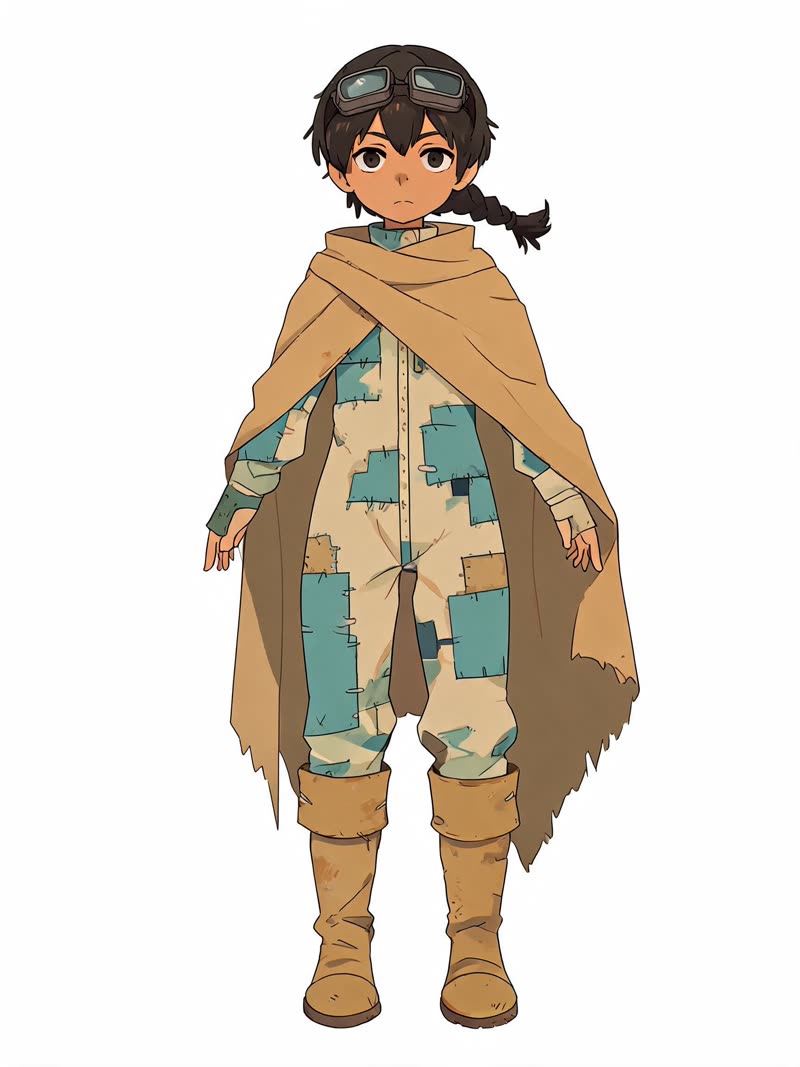
Game character sheet: a wandering desert scavenger girl for a 2D platformer, full body, front view, standing straight with arms slightly away from the body, weathered tan cloak over a patched jumpsuit, goggles pushed up on the forehead, short dark braid, worn leather boots, muted sand-and-teal palette, clean flat lighting, plain white background, no text, no logos, no shadow on the background
Sent unchanged to four of the catalog's five image models at 3:4, 2K — Seedream 5 LTE stands in for the Seedream family. Nothing was retried, and no model got a second attempt.
The brief is written the way a character sheet brief should be: who the character is, then the silhouette, then the costume, then the palette, then the framing. "Full body, front view, arms slightly away from the body" is not a style choice — it is the pose that survives being turned into a sprite, a 3D model, or a portrait crop later. "Plain white background, no shadow on the background" is what makes the figure easy to cut out.
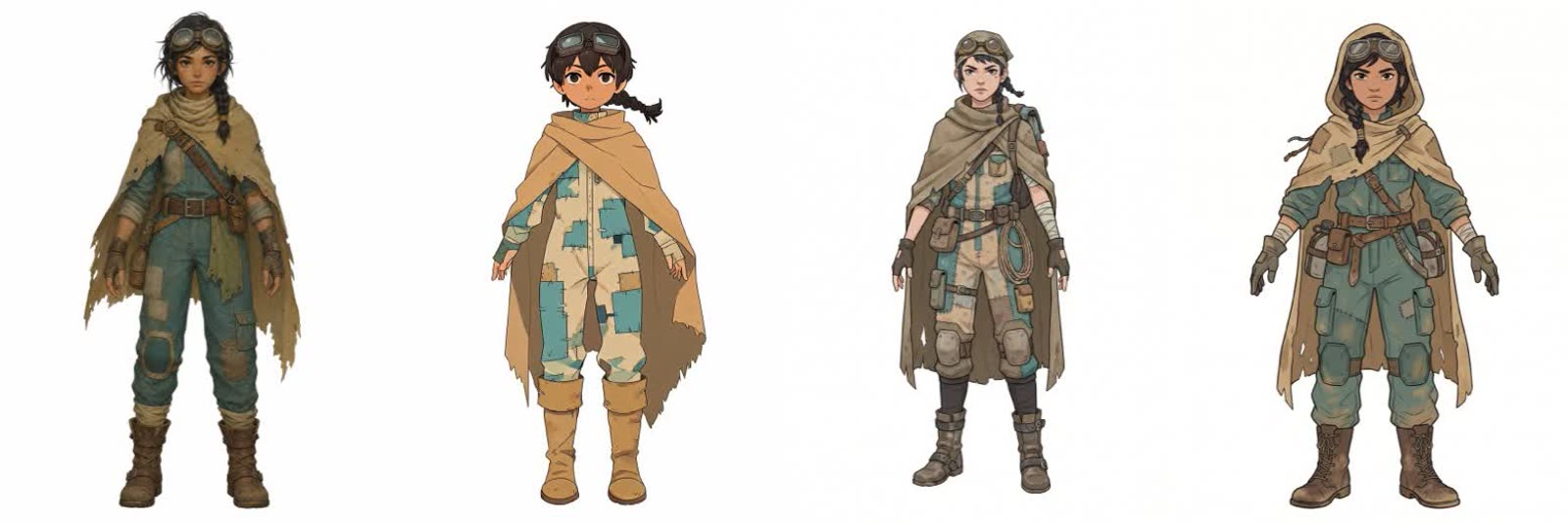
| Model | Price | Render time | What came back |
|---|---|---|---|
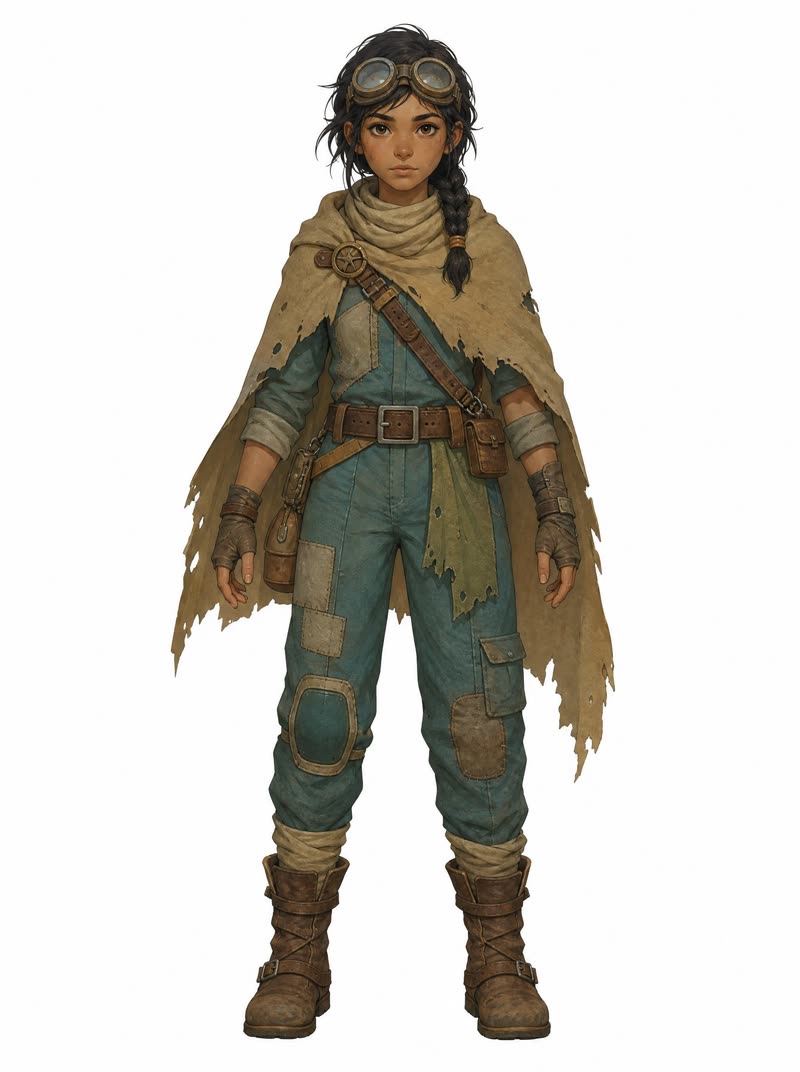
| GPT Image 2 | $0.15 per run | 4 min 21 s | the most realistic materials: frayed cloak edges, scuffed boots, worn denim |
| Seedream 5 LTE | $0.10 per run | 1 min 14 s | the most stylised, animation-leaning proportions and the boldest cloak shape |
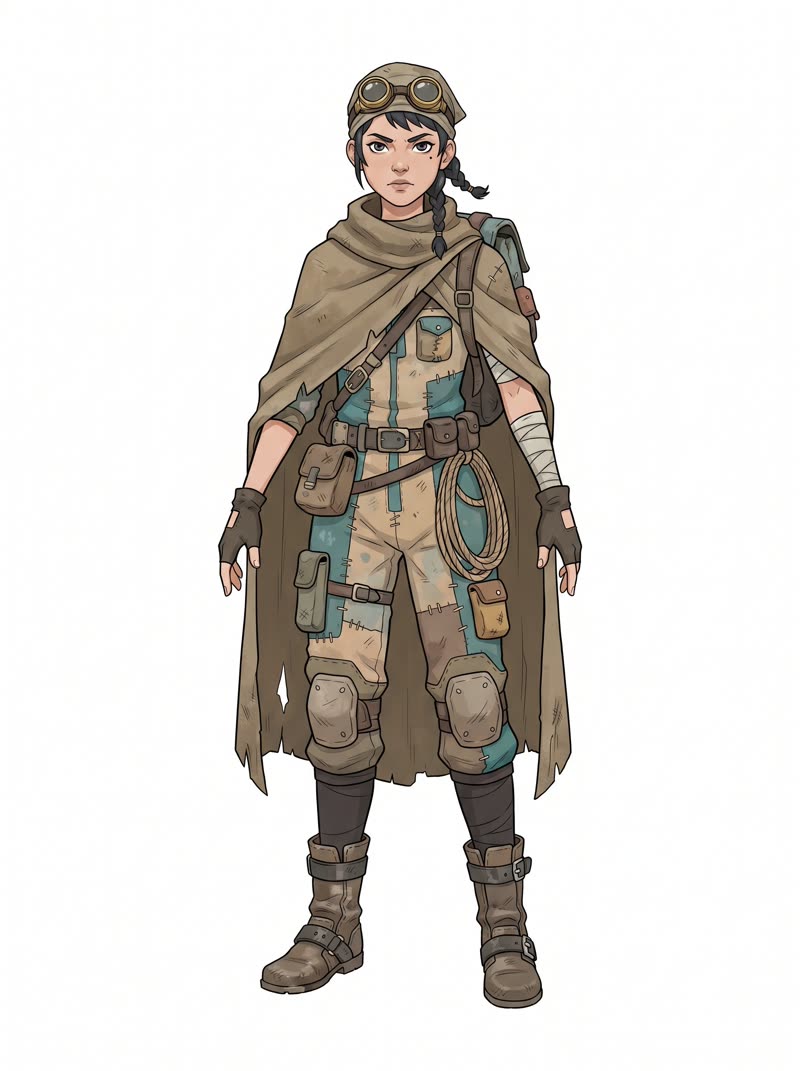
| Banana 2 | $0.20 per run | 27 s | the most gear: pouches, straps, wrapped forearms — closest to a working design sheet |
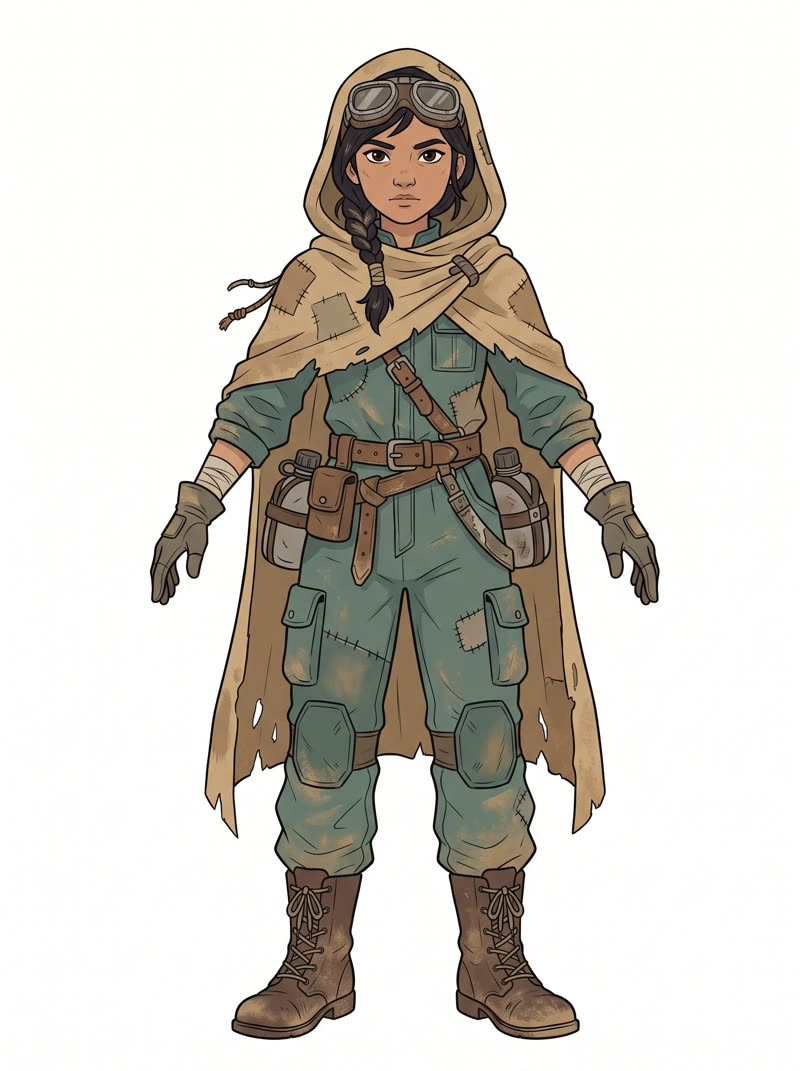
| Banana Pro | $0.30 per run | 37 s | between the two, and the only one that put the hood up |
What the four runs actually tell you
Price did not predict quality here, and it did not predict speed either. The sheet that took by far the longest came from a mid-priced model, the most expensive one was among the quickest, and the cheapest came back with the strongest point of view. That is the argument for running four rather than picking from a table: at these prices the whole bake-off cost less than a dollar, which is cheaper than the time spent deliberating.
One difference matters more than style. Banana Pro put the character's hood up; the brief never mentioned a hood, and it hides the braid and the goggles that the brief did ask for. Generated characters drift toward whatever the model thinks the archetype wears, so if a detail is load-bearing — a scar, a colour, an accessory the story depends on — say what must stay and say what must not appear. "Hood down, goggles visible" is one clause and it costs nothing.
Picking one, then keeping it
A character generator is only useful if the character survives the second image. Once you have chosen a sheet, hand that file back as a reference on every later run — a portrait, an idle pose, store art — and the models will hold the design far better than a re-typed description will. That is the same trick the game asset guide used to get two store images of one robot, and it is the reason the first sheet is worth a few extra runs.
The other reason to keep the winning sheet clean: it is the input for everything downstream. A front view on a plain background is what image to 3D wants, what a sprite cut-out wants, and what an image edit wants when you need the same character in armour. A dramatic three-quarter hero pose looks better on its own and is worse at every one of those jobs.
Running the bake-off yourself
你這樣問
Run this character brief through every image model you have, one image each, and save them side by side so I can compare.
The agent lists the models with prices before it runs anything; picking them is the approval. Four sheets at these prices come to under a dollar in total.
The Skill keeps an index of the catalog on disk, so the agent answers with the options and their prices before spending anything, and if the wallet cannot cover the runs it stops and hands you a top-up link. Every image lands as a file in your project through the image generation capability — there is no gallery to export from and no per-model API key to manage.
Set it up once
npm install --global @actionway/cli@latest
actionway init
mkdir -p "$HOME/.codex/skills"
cp -R "$HOME/.actionway/skill/actionway" "$HOME/.codex/skills/actionway"You need Node.js 20 or newer and an Actionway account. Claude Code users copy the same folder into ~/.claude/skills/actionway instead, and a plugin or Remote MCP route reaches the same catalog and the same wallet — the get started page lists the steps per client side by side.
常見問題
Can Codex generate game characters?Codex has its own image tool, and the Actionway Skill adds five more models beside it. With the Skill installed, the same session runs GPT Image 2, either Seedream variant, Banana 2, or Banana Pro from $0.10 per run and saves the sheet into your project.
Which model makes the best game character art?There is no single winner, which is why the four sheets above came from one brief. GPT Image 2 gave the most realistic materials, Seedream the most stylised proportions, Banana 2 the most usable gear detail, Banana Pro something between. Run all four; the whole comparison costs under a dollar.
How do I keep the same character across several images?Pass the chosen sheet back as a reference image on every later run instead of re-describing the character. Say explicitly what must stay visible too — one model in this test put the hood up and hid the goggles the brief asked for.